



The Exploitation of Fear of Missing Out (FOMO) in Video Game Design
 Milijana Komad / 10min
Keywords: Fear of Missing Out, FOMO, Video Gaming, Game Design, Player Engagement
Abstract:
This paper delves into the psychological concept of Fear of Missing Out (FOMO) and its application in the sphere of video game design. FOMO, a form of psychological manipulation, plays a pivotal role in influencing player behaviour and fostering continuous engagement. We explore and analyse this technique using a variety of case studies to provide a comprehensive understanding of its use and implications from a product designer’s standpoint.
Introduction
In the highly competitive landscape of the gaming industry, keeping players engaged is critical. A particularly effective tool at the disposal of game designers is the psychological principle of Fear of Missing Out, or FOMO. The inherent desire not to be left out or miss opportunities can significantly impact player behaviour, and it is this fear that game designers capitalize on to enhance player engagement and, potentially, monetization.
FOMO in Gaming: Conceptualization and Design
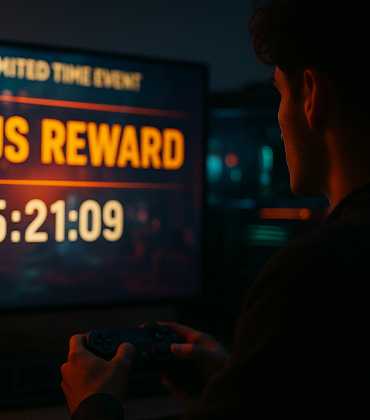
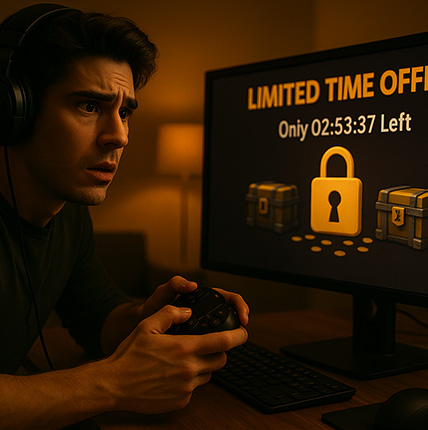
The application of FOMO in gaming hinges on creating an environment where players feel compelled to continue playing to avoid missing out on rewards, events, or social interaction. This can be achieved through various mechanisms like time-limited events, exclusive rewards, or seasonal content.
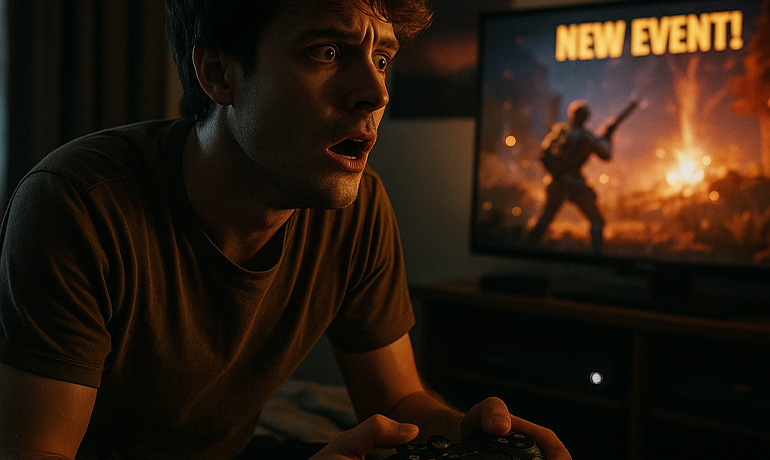
Time-limited events are a common way of inducing FOMO. These are special game events that occur for a limited duration and offer unique rewards. Players often feel the need to participate to avoid missing out on these opportunities, which in turn drives continuous engagement.
Exclusive rewards are another way of leveraging FOMO. This can take the form of limited-edition items that can only be earned or purchased within a specific timeframe, fostering a sense of urgency to obtain them before they’re gone.
“Design is the silent ambassador of your brand.”
Paul Rand
Case Study: Fortnite
Epic Games’ Fortnite utilizes FOMO through its “Battle Pass” system. Each Fortnite season has its own Battle Pass, available for a limited time, offering unique, tiered rewards that cannot be acquired once the season ends. This system effectively capitalizes on FOMO, as players often invest more time and money to secure all the rewards before the season concludes.
Case Study: Animal Crossing: New Horizons
Nintendo’s Animal Crossing: New Horizons provides an example of FOMO in a non-competitive environment. The game operates in real-time and offers events and activities tied to specific seasons or holidays. This model creates a compulsion to regularly engage with the game, as players fear missing out on seasonal content, which is not available once the time window has passed.
Implications for Game Design
While the exploitation of FOMO can enhance player engagement and monetization, game designers must be mindful of the potential implications. The incessant pressure to engage can lead to player burnout or foster unhealthy gaming habits. As such, designers must strive to strike a balance between leveraging FOMO and promoting a healthy gaming environment.
Conclusion
FOMO, as a psychological principle, has been skilfully adapted in game design to drive continuous player engagement. However, it’s crucial for designers to consider the potential repercussions of overexploitation of this principle. As the gaming industry evolves, it will be intriguing to see how the use of FOMO and similar psychological principles are ethically integrated into game design to create enjoyable, engaging experiences.
References:
1. Przybylski, A.K., Murayama, K., DeHaan, C.R., & Gladwell, V. (2013). Motivational, emotional, and behavioral correlates of fear of missing out. Computers in Human Behavior, 29(4), 1841–1848.
2. Alt, D., & Boniel-Nissim, M. (2018). Links between adolescents’ deep and surface learning approaches, problematic internet use, and Fear of Missing Out (FoMO). Internet Interventions, 13, 30–39.
3. Griffiths, M. D., & Pontes, H. M. (2014). Internet addiction disorder and internet gaming disorder are not the same. Journal of Addiction Research & Therapy, 5(4), e124.
4. Przybylski, A. K., Weinstein, N., & Murayama, K. (2016). Internet gaming disorder: Investigating the clinical relevance of a new phenomenon. American Journal of Psychiatry, 174(3), 230–236.
5. Hamari, J., & Keronen, L. (2017). Why do people buy virtual goods? Attitude towards virtual good purchases versus game enjoyment. International Journal of Information Management, 37(3), 299–308.
6. King, D., Delfabbro, P., & Griffiths, M. (2010). The convergence of gambling and digital media: Implications for gambling in young people. Journal of Gambling Studies, 26(2), 175–187.
7. Kuss, D. J., & Griffiths, M. D. (2012). Internet gaming addiction: A systematic review of empirical research. International Journal of Mental Health and Addiction, 10(2), 278–296.
8. Epic Games. (2017). Fortnite. [Video Game]. Cary, NC, USA.
9. Nintendo. (2020). Animal Crossing: New Horizons. [Video Game]. Kyoto, Japan.
10. Juul, J. (2013). The art of failure: An essay on the pain of playing video games. MIT Press.
11. Kuittinen, J., Kultima, A., Niemelä, J., & Paavilainen, J. (2007). Casual games discussion. Proceedings of the 2007 conference on Future Play, 105–112.
12. McGonigal, J. (2011). Reality is broken: Why games make us better and how they can change the world. Penguin.
13. Hamari, J., Alha, K., Järvelä, S., Kivikangas, J. M., Koivisto, J., & Paavilainen, J. (2017). Why do players buy in-game content? An empirical study on concrete purchase motivations. Computers in Human Behavior, 68, 538–546.
14. Suh, A., Cheung, C. M., Ahuja, M., & Wagner, C. (2017). Gamification in the workplace: The central role of the aesthetic experience. Journal of Management Information Systems, 34(1), 268–305.
15. Deterding, S., Dixon, D., Khaled, R., & Nacke, L. (2011). From game design elements to gamefulness: Defining gamification. Proceedings of the 15th international academic MindTrek conference: Envisioning future media environments, 9–15.





Related posts
Psychology / Design

Psychology / Design
The Exploitation of the Sunk Cost Fallacy in Video Game Design
Psychology / Design
The Application of Artificial Scarcity in Video Game Design
DIGITAL DESIGN EXPERIENCE
MILIJANA KOMAD